Burger King Nutrition: Healthy Eats at the Drive-Thru
Eating healthy on the go just got easier. Burger King Nutrition Menu options are more diverse than ever, offering a range of choices that cater to different dietary needs.
Understanding the nutritional value of your meal is crucial. With Burger King menu nutrition facts, you can make informed decisions about what you eat.
Whether you’re watching your calorie count or managing specific dietary requirements, Burger King provides the necessary information to help you make healthier choices.
Key Takeaways
- Explore healthier options at Burger King.
- Understand the nutritional facts of your meal.
- Make informed decisions with Burger King’s nutrition information.
- Manage your calorie intake effectively.
- Discover a range of dietary options available.
Understanding the Burger King Nutrition Menu
Making healthy choices at Burger King starts with understanding the nutritional information behind their menu items. With a diverse range of options, it’s essential to know how to access and interpret the nutrition facts.
How to Access Nutrition Information Online and In-Store
Burger King provides nutrition information both online and in-store. You can visit their official website to find a comprehensive nutrition guide, or ask for a nutrition brochure at your local restaurant. This information is crucial for making informed decisions about your meal choices.
Decoding Burger King’s Nutrition Labels
Understanding nutrition labels is key to making healthy choices. Burger King’s labels provide detailed information about calories, fat, sodium, and other essential metrics. Pay attention to serving sizes and be mindful of your overall nutrient intake.
Key Nutrition Metrics to Watch
When analyzing Burger King’s menu, focus on critical nutrition metrics such as calories, sodium, and saturated fat. Here’s a sample breakdown of key metrics for popular items:
| Menu Item | Calories | Sodium (mg) | Saturated Fat (g) |
|---|---|---|---|
| Whopper | 640 | 1040 | 3.5 |
| Grilled Chicken Sandwich | 380 | 950 | 2.5 |
| Fries (Medium) | 340 | 350 | 3.5 |
By understanding these metrics and accessing nutrition information, you can make smarter choices at Burger King that align with your dietary needs and preferences.
Burger King’s Menu at a Glance: Nutritional Overview
Understanding the nutritional content of Burger King’s menu is crucial for making informed decisions about your meal. With a diverse range of options available, it’s essential to have a clear view of what you’re consuming.
Calorie Range Across Menu Categories
Calorie counts at Burger King vary significantly across different menu categories. Burgers and sandwiches tend to be higher in calories, while salads and grilled chicken options are generally lower.
The calorie range for burgers can go from under 300 calories for a simple hamburger to over 1000 calories for larger, more loaded options like the Whopper with cheese.
Sodium, Fat, and Sugar Content Analysis
Sodium content is a significant concern at fast-food chains, including Burger King. Many menu items are high in sodium, with some burgers and sandwiches exceeding 1000mg per serving.
Fat content, including saturated fats, is also noteworthy, particularly in items with mayonnaise, cheese, and fried components.
Protein and Carbohydrate Breakdown
Protein content varies across the menu, with grilled chicken and burgers being good protein sources. Carbohydrates are found in buns, fries, and some desserts.
| Menu Category | Average Calories | Average Sodium (mg) | Average Protein (g) |
|---|---|---|---|
| Burgers | 500-1000 | 800-1500 | 20-40 |
| Grilled Chicken | 300-600 | 500-1000 | 30-50 |
| Salads | 100-400 | 200-800 | 10-30 |
Healthiest Burger Options at Burger King
Eating healthy at Burger King is possible if you know what to order. While burgers are often seen as indulgent, some options are better than others. Let’s dive into the nutritional details of Burger King’s burgers and explore how to make healthier choices.
Hamburger vs. Whopper: Nutrition Showdown
The classic Hamburger and the Whopper are two of Burger King’s most iconic burgers. But how do they stack up nutritionally? The Hamburger has 310 calories, 11g of fat, and 930mg of sodium. In contrast, the Whopper has 640 calories, 37g of fat, and 1040mg of sodium. As “you can’t go wrong with the simpler option”, the Hamburger is significantly lower in calories and fat.
Lower-Calorie Burger Alternatives Worth Trying
If you’re looking for even healthier burger options, consider the Impossible Whopper, which has 630 calories and 25g of fat. Another option is to customize your burger to reduce calories. For instance, opting out of cheese or mayo can save you a significant amount of calories.
Smart Customization Tips for Healthier Burgers
Customizing your burger can make a big difference in its nutritional value. Here are some tips:
- Choose a smaller patty or fewer toppings to reduce calorie intake.
- Opt for a whole-grain bun if available.
- Load up on veggies like lettuce, tomato, and onions for added fiber and nutrients.
- Skip the cheese and mayo to lower fat and calorie counts.
As
“The key to a healthy diet is making informed choices.”
, being mindful of these options can help you enjoy a healthier meal at Burger King.
Chicken and Fish Items: Making Smarter Protein Choices
Burger King’s menu offers a variety of chicken and fish items, but understanding their nutritional value is key to making smarter choices. When opting for chicken or fish, it’s crucial to consider the cooking method, ingredients, and nutritional content to make an informed decision.
Grilled vs. Crispy Chicken: What’s the Difference?
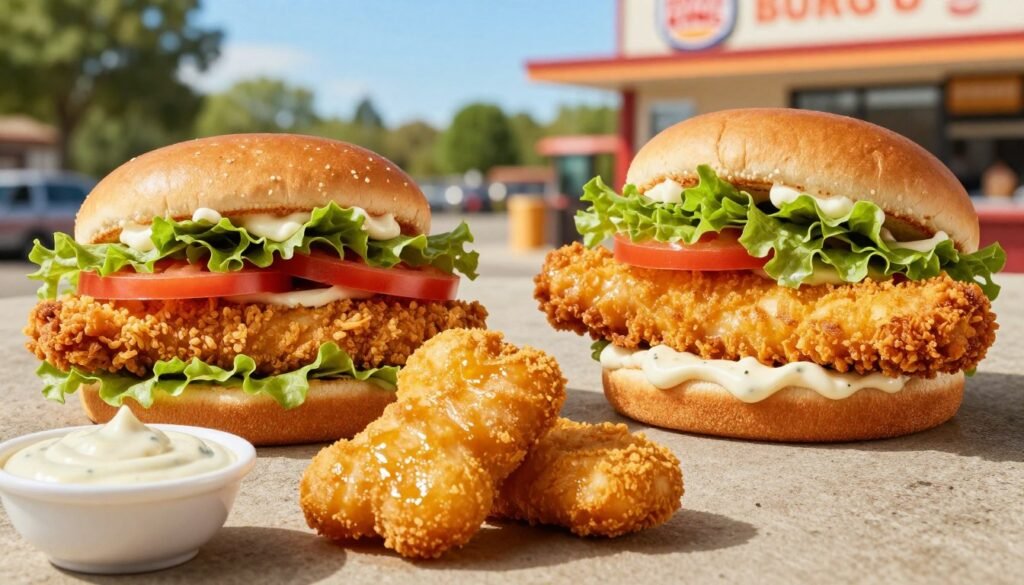
The choice between grilled and crispy chicken at Burger King significantly impacts the nutritional value of your meal. Grilled chicken tends to be lower in calories and fat compared to its crispy counterpart, which is breaded and fried. For instance, a Grilled Chicken Sandwich contains approximately 310 calories and 3.5g of fat, whereas a Crispy Chicken Sandwich has around 690 calories and 41g of fat.
Fish Options and Their Nutritional Profile
Burger King’s fish options, such as the Big Fish Sandwich, offer a different nutritional profile compared to their chicken counterparts. The Big Fish Sandwich contains around 640 calories, with 37g of fat and 710mg of sodium. While it can be a satisfying option, it’s essential to be mindful of the calorie and sodium content.
Protein-Rich Choices Under 500 Calories
For those looking for protein-rich options without excessive calories, Burger King offers several choices under 500 calories. The Grilled Chicken Sandwich is a prime example, providing a good amount of protein while keeping calories in check. Another option is to customize your meal by opting for smaller portions or modifying ingredients to reduce calorie intake.
| Menu Item | Calories | Protein (g) | Fat (g) |
|---|---|---|---|
| Grilled Chicken Sandwich | 310 | 30 | 3.5 |
| Crispy Chicken Sandwich | 690 | 25 | 41 |
| Big Fish Sandwich | 640 | 25 | 37 |
Breakfast Menu Nutrition Facts and Healthier Morning Options
Understanding the nutritional value of Burger King’s breakfast menu can help you enjoy a healthier morning meal. Burger King offers a variety of breakfast options, but the nutritional content can vary significantly.
Breakfast Sandwiches Ranked by Nutrition
Breakfast sandwiches are a staple at Burger King. The Croissan’wich with Egg and Cheese is a popular choice, with approximately 350 calories. However, adding bacon or sausage increases the calorie count. Opting for a simpler sandwich like the French Toast Croissan’wich without additional meats can be a relatively healthier choice, with around 310 calories.
When ranking breakfast sandwiches, consider the protein content, calorie count, and presence of saturated fats. For instance, sandwiches with egg and cheese provide a good protein boost but may be high in saturated fats.
Breakfast Sides and Their Impact on Your Morning Meal
Breakfast sides, such as hash browns, can significantly impact the nutritional value of your meal. A serving of hash browns contains around 140 calories, mostly from carbohydrates and fats. While they can be part of a balanced meal, be mindful of portion sizes to avoid excessive calorie intake.
Alternatively, consider pairing your breakfast sandwich with a fruit or yogurt parfait for a more balanced meal. These options add natural sweetness and extra nutrients without the high calorie count of hash browns.
Complete Breakfast Combinations Under 600 Calories
Creating a complete breakfast that is under 600 calories requires some planning. A Croissan’wich with Egg (320 calories) paired with a small coffee or tea and a fruit cup makes for a satisfying and relatively low-calorie meal.
For those looking for a heartier breakfast, combining a breakfast sandwich with a side like hash browns can still keep the meal under 600 calories. For example, a Bacon, Egg & Cheese Biscuit (420 calories) with a small hash brown (140 calories) totals 560 calories, leaving room for a beverage or a small snack.
Side Items and Salads: Beyond the Whopper
Beyond the iconic Whopper, Burger King offers a variety of side items and salads that can complement or detract from a healthy meal. Understanding the nutritional value of these options is crucial for making informed choices.
French Fries Nutrition and Better Alternatives
French fries are a popular side item at Burger King, but they are high in calories, sodium, and fat. A large order of French fries contains approximately 510 calories, 1230 mg of sodium, and 24g of fat. For a healthier alternative, consider opting for a side salad or a fruit option if available.
Nutritional Comparison: A small order of French fries has 340 calories, while a BK Broiler Chicken Salad with a light dressing has around 140 calories.
Salad Options and Dressing Nutrition Facts
Burger King offers various salads that can be a nutritious choice, but the dressing can greatly impact the calorie count. The BK Broiler Chicken Salad is a good source of protein, but adding a rich dressing can increase the calorie count significantly.
Ranking Side Items from Most to Least Nutritious
When choosing side items, it’s essential to consider their nutritional value. Here’s a quick ranking:
- Side salad with light dressing
- Apple slices
- Small French fries
- Large French fries
By making informed choices, you can enjoy a more balanced meal at Burger King.
Kid-Friendly Choices on the Burger King Menu
Burger King understands the importance of catering to children, offering meals that are both appealing and healthy. The chain’s kid-friendly menu options are designed to satisfy the cravings of younger customers while providing parents with convenient and relatively healthy dining solutions.
Nutrition Breakdown of Kids Meals
The Burger King kids’ meal typically includes a main item, fries, and a drink. The main items often feature the Impossible Whopper Jr. or the Cheeseburger. Understanding the nutritional content of these meals is crucial for making informed choices.
| Meal Option | Calories | Fat (g) | Sodium (mg) |
|---|---|---|---|
| Cheeseburger Kids Meal | 440 | 23 | 740 |
| Impossible Whopper Jr. Kids Meal | 420 | 20 | 680 |
Healthier Options for Children at Burger King
While Burger King is known for its burgers and fries, there are healthier options available for children. Opting for the grilled chicken sandwich or choosing to substitute fries with a side salad can significantly reduce calorie and fat intake.
Balancing Treats and Nutrition for Family Meals
For families dining at Burger King, balancing treats with nutritious choices is key. Parents can consider sharing a larger meal or choosing smaller portions to keep calorie counts in check. Additionally, selecting water or low-fat milk instead of soda can make a significant difference in the overall nutritional value of the meal.
Special Dietary Needs at Burger King
Burger King understands the importance of catering to diverse dietary needs, offering a range of options for customers with specific requirements. The fast-food chain has made significant strides in recent years to accommodate various dietary preferences and restrictions, making it easier for everyone to enjoy their meals.
Vegetarian and Plant-Based Menu Options
Burger King has introduced several vegetarian and plant-based options to cater to the growing demand for plant-centric meals. The Impossible Whopper is a notable addition, featuring a patty made from Impossible Foods’ plant-based meat substitute. This option is not only appealing to vegetarians but also to those looking to reduce their meat consumption.
Other vegetarian options include the veggie burger and various salads that can be customized to suit dietary preferences. Burger King’s commitment to providing a variety of plant-based options enhances its appeal to a broader customer base.
| Menu Item | Calories | Protein (g) | Fat (g) |
|---|---|---|---|
| Impossible Whopper | 630 | 25 | 36 |
| Veggie Burger | 410 | 13 | 18 |
| Garden Salad | 150 | 3 | 7 |
Navigating Food Allergies and Sensitivities
Burger King takes food allergies and sensitivities seriously, providing detailed nutritional information to help customers make informed choices. The company lists common allergens such as peanuts, tree nuts, milk, eggs, fish, shellfish, soy, and wheat on its website and in-store nutrition materials.
For customers with severe allergies, Burger King’s preparation procedures are designed to minimize cross-contamination. However, it’s always recommended that customers inform the staff about their allergies to ensure their safety.
“At Burger King, we understand that food allergies and sensitivities are a serious concern. We’re committed to providing our customers with the information they need to make safe choices.”
Low-Carb, Keto, and Other Diet-Specific Choices
For those following low-carb or keto diets, Burger King offers several options that can be adapted to fit these dietary requirements. The Whopper without the bun is a popular choice, significantly reducing the carbohydrate content of the meal.
Other low-carb options include grilled chicken sandwiches (without the bun) and salads with protein. It’s essential for customers to be mindful of the sauces and dressings used, as they can be high in sugar and carbs.
By providing a range of options and detailed nutritional information, Burger King demonstrates its commitment to catering to the diverse needs of its customers. Whether you’re vegetarian, have a food allergy, or are following a specific diet, Burger King aims to ensure that everyone can enjoy a meal that suits their requirements.
Comparing Burger King Nutrition to Other Fast Food Giants
A closer look at Burger King’s nutrition facts reveals how it stacks up against the competition. When evaluating fast-food chains, understanding the nutritional content of their menu items is crucial. Burger King, a prominent player in the industry, is often compared to its rivals McDonald’s and Wendy’s.
Burger King vs. McDonald’s: Nutrition Face-Off
In a comparison between Burger King and McDonald’s, the nutritional differences are notable. For instance, Burger King’s Grilled Chicken Sandwich has 340 calories, whereas McDonald’s Grilled Chicken Sandwich has 380 calories. This difference highlights Burger King’s slightly healthier option. As noted by a nutrition expert, “Even small differences in calorie count can impact overall health.”
Burger King vs. Wendy’s: Which Has Healthier Options?
When comparing Burger King to Wendy’s, the picture is mixed. Wendy’s offers a Spicy Chicken Sandwich with 440 calories, while Burger King’s equivalent is 410 calories. However, Wendy’s also offers a lower-sodium option in their grilled chicken. As a quote from a health-focused study states, “Lower sodium intake is associated with reduced risk of cardiovascular disease.”
“The nutritional value of fast food can vary significantly between chains, making informed choices crucial.”
How BK Stacks Up in the Fast Food Nutrition Landscape
Burger King’s nutrition menu offers a range of options, some healthier than others. Compared to its competitors, Burger King falls in the middle in terms of nutritional value. By making informed choices, such as opting for grilled over fried, consumers can enjoy a relatively healthier meal at Burger King.
Conclusion: Making Smarter Choices at the King
Dining at Burger King doesn’t have to mean sacrificing your healthy eating goals. By understanding the Burger King nutritional information, you can make informed decisions that fit your dietary needs. Whether you’re looking for Burger King healthier options or simply want to balance your meal, the key is in the details.
From choosing lower-calorie burgers to customizing your meal with nutritious sides, there are plenty of ways to eat well at Burger King. The grilled chicken sandwich, for instance, is a protein-rich choice that can be paired with a side salad for a more balanced meal. Being mindful of portion sizes and nutrition facts can also help you make smarter choices.
By leveraging the nutritional information available online or in-store, you can enjoy your favorite fast food while keeping your health goals on track. So next time you’re at Burger King, take a moment to review the menu and make choices that align with your nutritional preferences. With a little planning, you can have a satisfying meal that meets your needs.